News
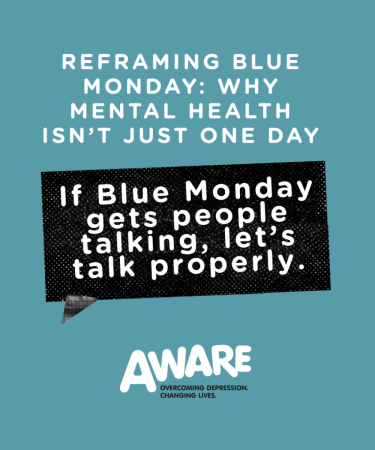
Reframing Blue Monday: Why Mental Health Isn’t Just One Day
Every year, headlines describe Blue Monday as the “most depressing day of the year.” While this can start important conversations about mental health, it also oversimplifies the reality of emotional wellbeing. In this blog, we explore what Blue Monday really means, why January can be challenging, and what steps you can take to support your mental wellbeing.
What Is Blue Monday and Why It’s an Oversimplification
The origin of Blue Monday is a marketing myth in the early 2000s that claimed to identify the most depressing day of the year through a mathematical formula. This formula was never peer-reviewed or based on any recognised scientific or medical research. Emotional wellbeing is very personalised and individualistic and it’s not possible to calculate a one size fits all most depressing day of the year.
It is important to acknowledge that many people struggle with their emotional wellbeing in the month of January for a range of factors. There are less daylight hours making it difficult to do the things we normally do to maintain good mental wellbeing, it can be a difficult financial period after the festive holidays which can increase feelings of stress. You might feel tired, flat, unmotivated, overwhelmed - or you might feel absolutely fine. All of these experiences are valid. There’s no right or wrong way to feel today.
Steps to Support Your Mental Wellbeing
It's clear that mental health is beyond a single day, but you can take steps to get support today or any other day of the year. You don’t have to do all of them - even one is more than enough.
- Reach out to someone you trust and talk about how you’re feeling. This can help reduce feelings of stress or isolation, and help you process how you’re feeling, and prevent emotional build-up as suppressing feelings can manifest in physical symptoms such as headaches or fatigue.
- Join an AWARE NI support group. We have 24 peer support groups operating online and across Northern Ireland which are free to attend and have no wait list. These groups connect you with others who understand how you feel so that you feel less isolated and can learn helpful coping strategies from other attendees. Find a free AWARE NI support group by clicking here.
- Learn more about coping techniques. The Public Health Agency’s ‘Take 5 Ways to Wellbeing’ is the most evidence-based way to maintain good mental wellbeing. AWARE NI also offers a range of programmes for individuals, parents and carers, teachers and more to learn tools related to Cognitive Behavioural Therapy and mindfulness. Find out more about some of AWARE NI’s free mental health courses upcoming in January by clicking here.
How Supporting Others Is Great for Your Mental Health
For some people, one step today might be reaching out. For others, it might be helping someone else feel less alone.
You can support AWARE NI and give back through volunteering or taking part in one of our fundraising challenges. Giving is part of the PHA’s Five Ways to Wellbeing and is one of the five most evidence-based methods of maintaining good mental wellbeing.
Research has consistently shown that giving to others boosts mood, reduces stress, and helps builds self-esteem and a sense of purpose. Similar to a runner’s high, giving releases a similar set of feel-good hormones known as a ‘helpers high’.
If Blue Monday has you thinking about mental health, that’s a meaningful place to start.
Whether your next step is reaching out, joining a group, learning new coping tools, or supporting someone else - AWARE NI is here to walk alongside you.
Tags: AWARE | Blue Monday | Depression | Mental Health | Northern Ireland